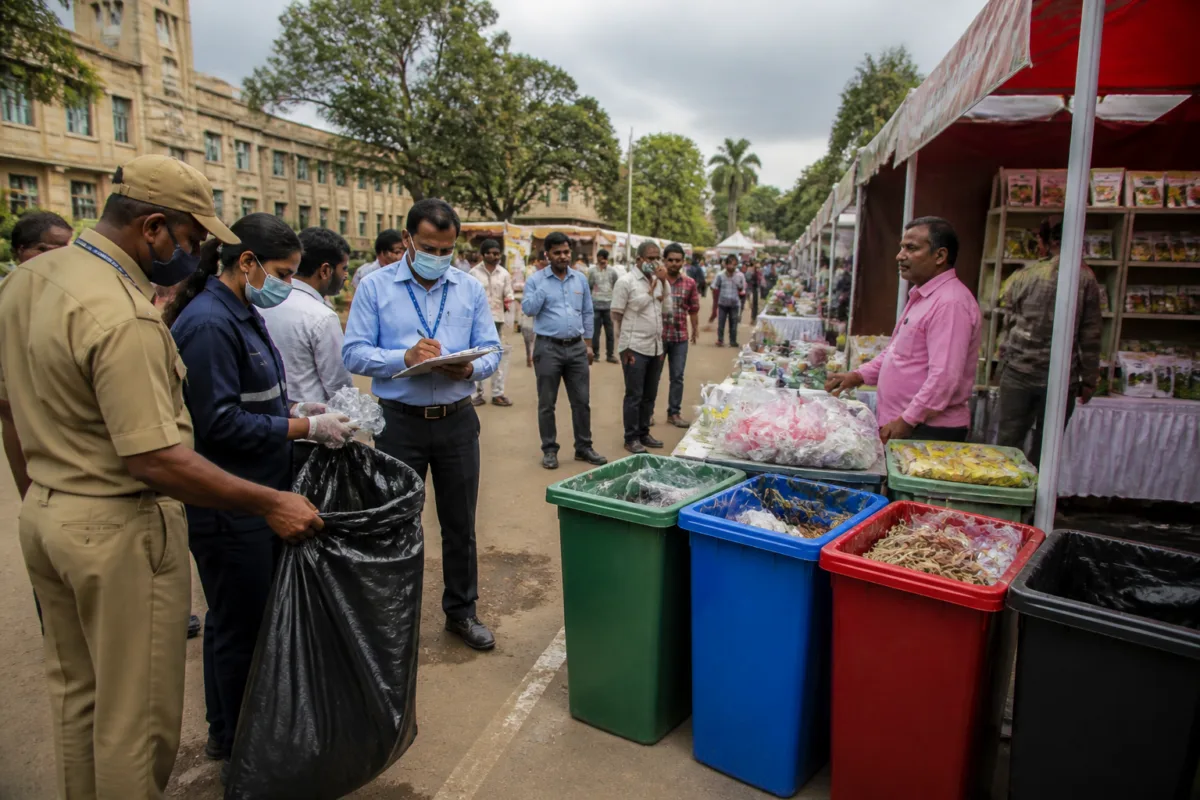
Bengaluru authorities fined stalls at the Krishi Mela on the GKVK campus ₹4,000 for using banned single-use plastic and dumping waste. The civic body has also issued a notice to organisers to ensure the event becomes zero-waste. The event is currently ongoing.
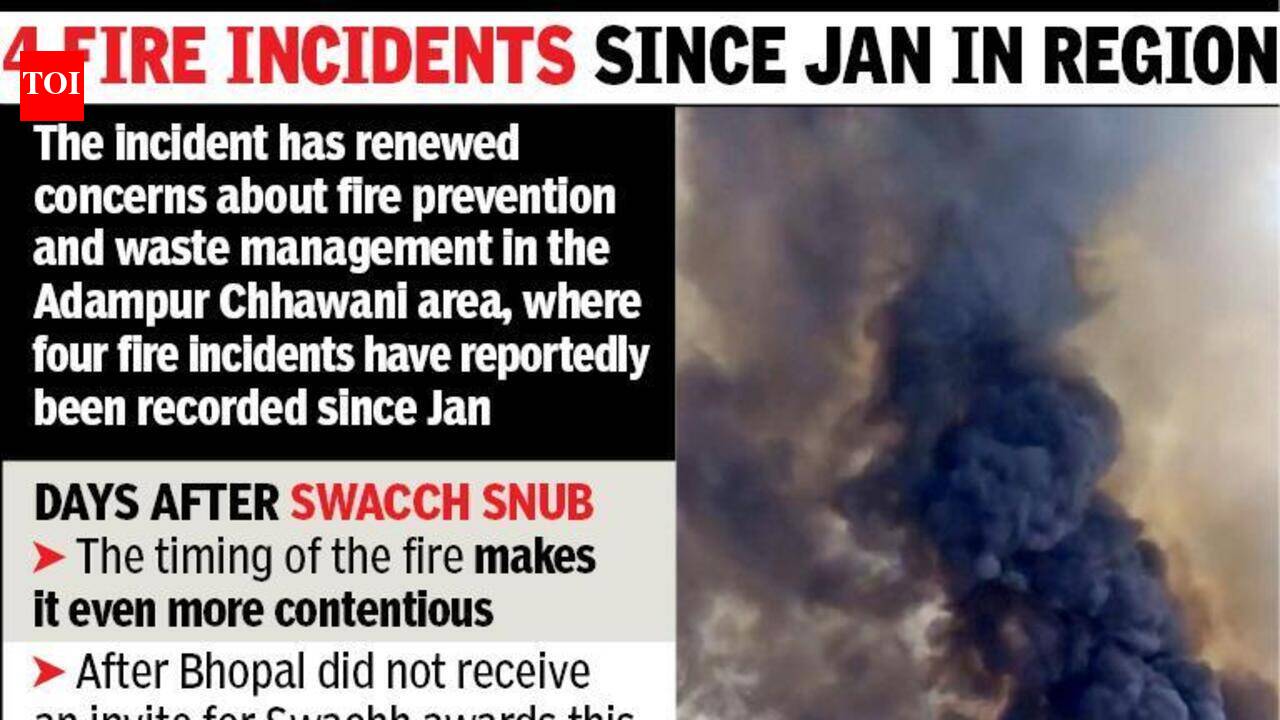
A fire at a plastic recycling plant in Adampur Chhawani destroyed five tonnes of raw material, sending smoke across 12 to 15 villages. Residents reported breathing difficulties and eye irritation as plumes rose 100 feet. Four fire tenders were required to address the blaze.
Uttar Pradesh Chief Minister Yogi Adityanath described single-use plastic as a serious threat to the environment and future generations. Addressing the Gomti Utsav, he urged citizens to immediately stop using plastic for temporary convenience and switch to reusable materials to prevent river pollution.
A fire broke out at the Adampur waste processing facility on Monday, marking the fourth such incident at the plant this year. The blaze occurred one day before a Supreme Court hearing regarding the site. The cause of the fire remains unknown.
A pilot scheme replacing single-use plastic cups at Belfast venues has avoided 30 tonnes of waste and 105 tonnes of carbon. Organisers claim the initiative saved 1.5 million cups since January 2025. The project will now become permanent and expand to further arenas.
Cardiff Council will launch a soft plastic recycling trial for 21,000 households on October 13. Residents will receive new red bags to prepare for the service, which anticipates a Welsh Government requirement for kerbside collections by April 2027. The city is adding an eighth bin to its roster.
Madhya Pradesh is pursuing 105 new projects in the rubber and plastic sector with an investment of approximately ₹6,000 crore. The state cites its central location and investor-friendly policies as key drivers. The upcoming Plast Pack 2026 exhibition will showcase further industry opportunities.
A study in Discover Polymers proposes replacing non-biodegradable plastics with interpolyelectrolyte complexes. These materials assemble and dissociate based on carbon dioxide sorption and desorption. The process uses synthetic poly(allylammonium) bicarbonate and natural sodium alginate extracted from brown algae to create a reversible, sustainable strategy.
Researchers estimate that mismanaged plastic waste and burning contribute to hundreds of thousands of deaths annually in developing countries. Studies also link specific plastic additives like phthalates to cardiovascular issues. Global mortality rates remain difficult to track due to the variety of environmental and chemical pathways.
India's wholesale inflation rose to 12.29 percent in October 2026, the highest level in the current base series. The increase was driven by higher prices for food, fuel, and transportation services. This follows an inflation rate of 11.39 percent in the previous month.
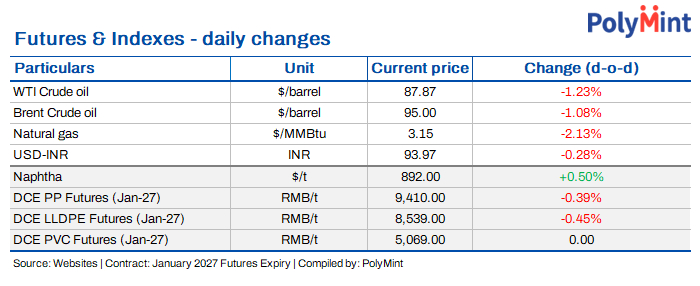
Global polymer markets are showing signs of cooling after months of price increases. Declining crude oil costs and weakening downstream demand have led to softer sentiment in China and resistance from buyers in India and Southeast Asia. Producers may struggle to sustain recent price levels.
Braskem is expected to continue with force majeure measures regarding supplies from its Wesseling polypropylene plant. The company has requested that users enable browser cookies to access further information regarding their services.
Covestro and Fraunhofer UMSICHT are researching the extraction of BTEX aromatics from end-of-life vehicles. The project aims to recover benzene and toluene from polyurethane-heavy components found in shredder light fractions. These chemicals are essential precursors for producing insulating foams and automotive seating.
The automotive and plastics industries are calling for a unified EU industrial policy. While electric vehicles require 30 percent more chemicals, total car production is halving due to international competition. The sectors argue that electrification must be treated as an opportunity rather than a paradox.
The global butylated hydroxytoluene market enters 2026 with more disciplined procurement and a regionally diversified supply architecture. Demand remains anchored in plastics, rubber, and food preservation. The segment is currently shaped by cost-competitive Asian production and increasing regulatory scrutiny regarding consumer applications.
Researchers and small businesses in Africa are melting discarded water sachets and mixing them with sand to create construction materials. The process aims to address plastic pollution and the demand for building supplies. The sachets are currently a common sight in gutters and at refuse dumps.
Reconomy has opened a facility in Corby, England, which it calls one of the UK's largest dedicated plastic recycling plants. The company invested $25 million to process 38,000 metric tons of plastic annually. The site aims to support infrastructure after 19 recycling sites closed since 2023.
The Washington Department of Ecology fined 38 companies a total of $246,548 for failing to meet recycled material requirements for single-use containers. Fines per company ranged from $131 to $43,381. The state law, passed in 2021, mandates specific levels of recycled content in various plastic products.
Data from WRAP shows that Plastic Packaging Pact members reached 62.9% recycled content in 2025/26, compared to 56% for non-members. Recycled content across all participants rose from 9% in 2018 to 28.8% in 2024. The Plastic Packaging Tax applies to packaging containing less than 30% recycled plastic.
A Korean research team used AI and catalytic experiments to determine how impurities affect waste plastic pyrolysis oil. The findings provide a method for predicting performance declines in petrochemical feedstocks. The study was conducted by the Korea Research Institute of Chemical Technology and Korea University of Technology and Education.
The UK government is exempting glass drink containers sold directly to licensed venues from Extended Producer Responsibility fees. The measure aims to prevent double-charging for recycling. A pub selling 10,000 beer bottles and 3,700 wine bottles is expected to save up to £870 annually starting in 2027.
From April 2027, glass bottles sold directly to hospitality businesses will be exempt from Extended Producer Responsibility fees. The government says this will save pubs up to £870 per year. The move is intended to support the British glass industry and reduce double-charging for waste management.
Phillip Binneman, a former farmer, has partnered with Abacus Polymers to recycle empty plastic pesticide and fertilizer containers. The initiative seeks to manage the waste generated by high-production farming operations. The project aims to turn unavoidable agricultural refuse into new plastic products.
ZeeHub has released software for U.S. food and beverage brands to collect packaging data directly from suppliers. With seven states now enforcing packaging EPR laws, brands must report the exact material and weight of components. The software automates the process of emailing suppliers for missing data.
The Foodservice Packaging Association cautioned that exempting glass from EPR fees must not increase costs for other materials. The government estimates the exemption will save pubs £870 annually by removing double-charging. The policy change for direct-to-venue glass supplies is scheduled to take effect in April 2027.
The UK government recycled 56% of its estate waste in 2024/25, missing its 70% goal. While total waste generation fell 16% against the 2017/18 baseline, the target for recycling was not met. Defra reported that landfill use accounted for 2% of total waste.
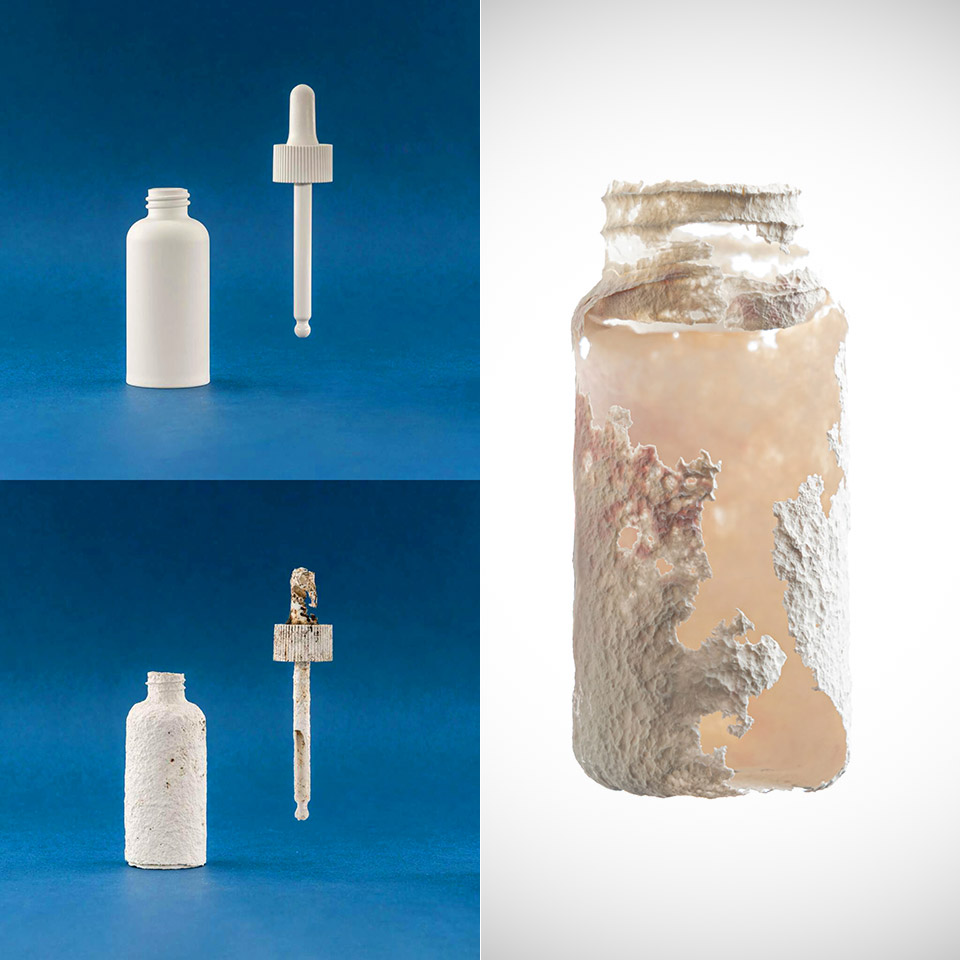
Shellworks has introduced VIVOMER, a material designed to run through existing injection and blow molding machines. The company says the product survives hot water and handling while remaining compostable. It is currently being used to create various containers as a substitute for conventional, fossil-fuel-based plastic packaging.
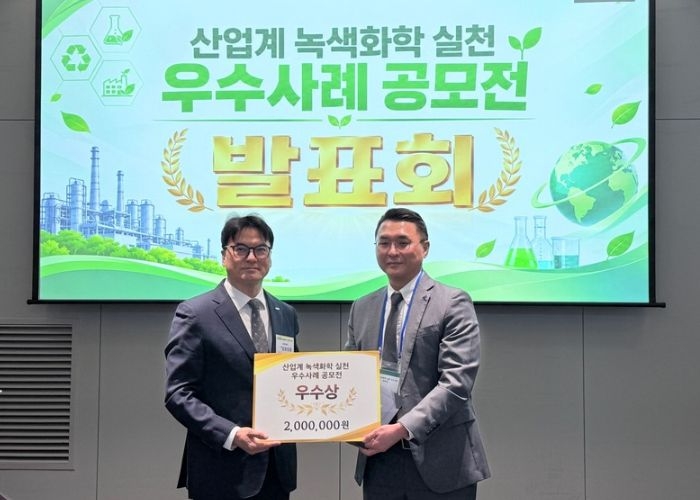
Dongsung Chemical earned the Korea Environment Corporation President Award for its ECOVIVA packaging. The company says its physical foaming process eliminates the need for chemical blowing agents while maintaining insulation performance. The award was presented during the 7th Chemical Safety Week in Seoul.
The global sugarcane bagasse fibre market was valued at $1.1 billion in 2025 and is expected to reach $2.18 billion by 2035, according to Fact.MR. The firm attributes this growth to a shift toward biodegradable industrial materials and the increased utilization of agricultural residues.
Dongsung Chemical won an excellence award at a government green chemistry contest for its ECOVIVA packaging material. The company says the product is manufactured without chemical blowing agents. Mass production is currently underway in Ulsan, with plans to expand the material into other packaging applications.
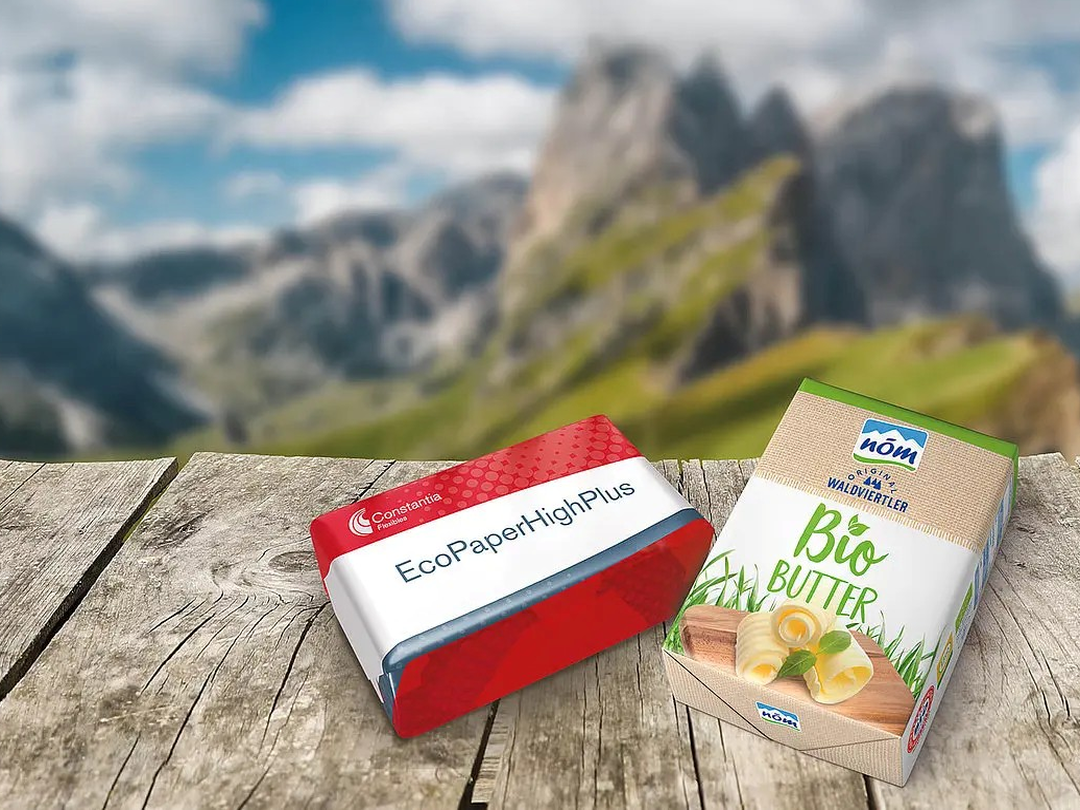
Constantia Flexibles and NÖM AG have introduced a paper-based butter wrap designed to offer grease resistance and aroma protection. The companies say testing shows the material provides a shelf life comparable to traditional aluminium-based packaging. It is intended to combine product protection with end-of-life recyclability.
The U.S. Plastics Pact honored Amcor for its PP Revolution dip cups. The company says the cups are designed for recyclability to help brands transition away from polystyrene. Select sizes have achieved a Preferred rating for size sorting potential under the APR Design Guide.
Aardra S Nair has launched a project to turn coir fibre trimmings into packaging materials. The trimmings, which are typically discarded as waste by mattress manufacturers, contain high levels of lignin. The entrepreneur is now working to convert these fibrous scraps into a commercial product.
Shellworks is marketing its Vivomer biomaterial as a compostable alternative to plastic that is waterproof and safe for food storage. The company says the material is durable enough for dishwasher use. It is currently being used to produce a range of containers for consumer goods.
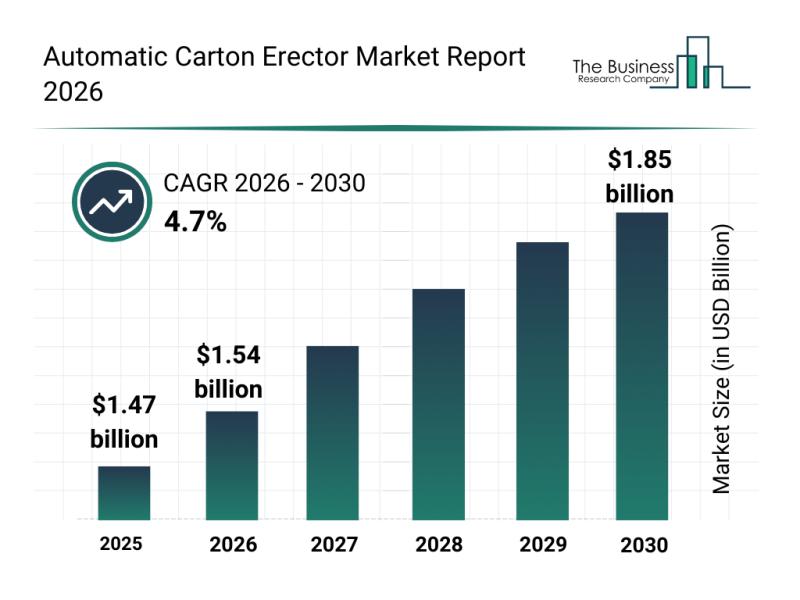
The automatic carton erector market is projected to grow from $1.47 billion in 2025. Industry reports cite rising packaging demands and improvements in worker safety through automation as primary drivers for the sector. The market is currently experiencing consistent expansion across various industries.
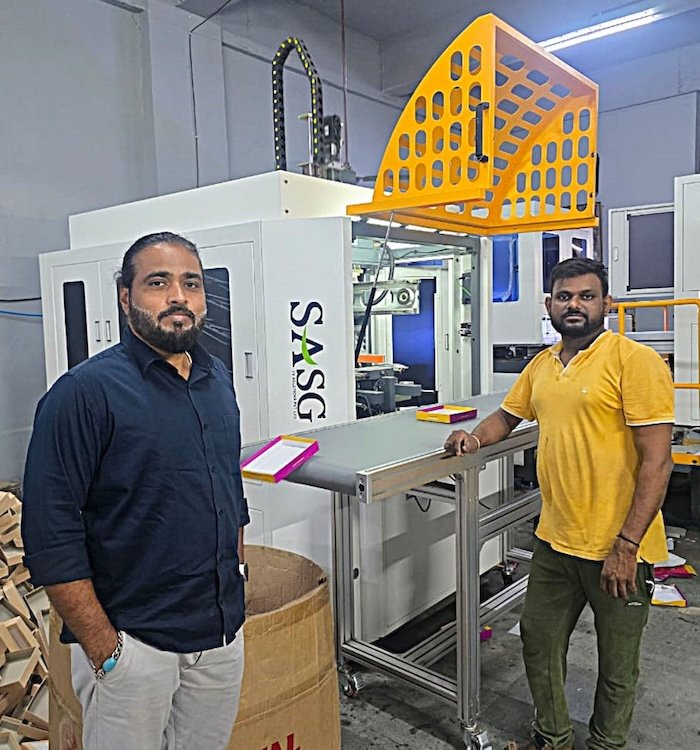
Mumbai-based Impact Packaging has installed a rigid box-making machine and a V-grooving machine from SASG UV Solutions. Proprietor Vaibhav Salunke says the new equipment is compact and versatile, allowing the firm to produce a wider variety of box designs and sizes for its customers.
Operators are increasingly using strategic retrofits and maintenance to extend the lifespan of packaging equipment. The focus remains on maintaining peak overall equipment effectiveness as machinery ages. These interventions are designed to keep existing production lines running without requiring full system replacements.
Tecnau and Sitma have appointed Vince Vassil and David Pachón to regional sales roles in Southeast and Latin America. The company says the appointments are intended to support growth in packaging automation, commercial printing, and direct mail as it expands its commercial operations in these markets.
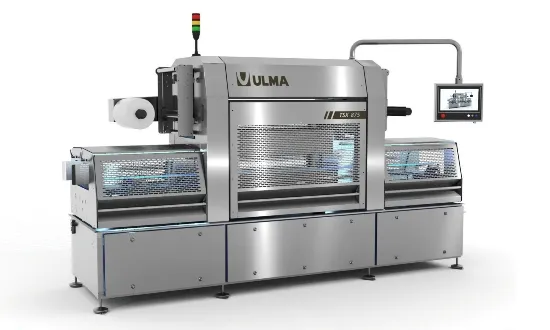
ULMA Packaging has introduced the TSX 875 traysealer, which features Fast Skin technology. The company says the machine can operate at up to 13 cycles per minute. It is designed to adapt film to product contours while maintaining seal integrity for fresh and prepared food products.
Romaco will showcase its blister packaging, tablet pressing, and laboratory processing equipment at PMEC India 2026. The company says its offerings range from standalone machines to turnkey production lines. The exhibit will feature the N 950E blister packer, which is designed for high-speed pharmaceutical packaging.
Exhibitors at the upcoming APPEX 2027 event are highlighting five key trends in machinery design. The primary focus for manufacturers is reducing waste without sacrificing performance. Industry participants will discuss these solutions and the latest technology across processing and packaging lines at the event.
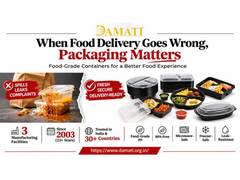
Damati suggests that food packaging is a critical component of the customer experience, noting that loose lids and spills can lead to negative reviews and lost business. The company argues that even the best prepared food can leave a disappointing impression when the container fails during transport.
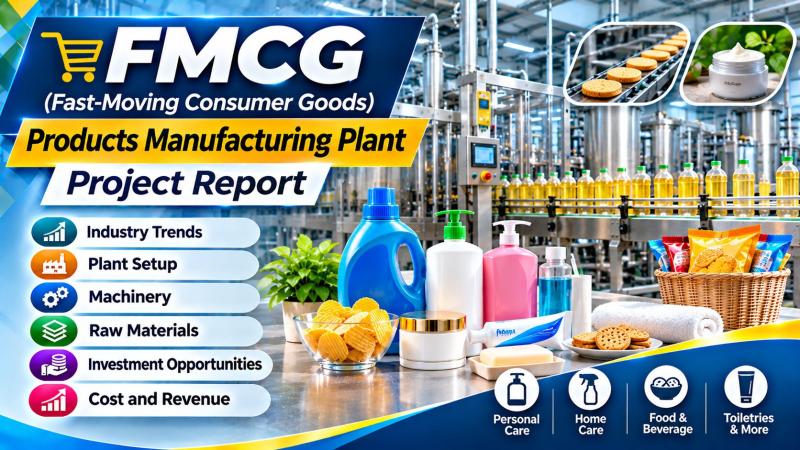
Setting up an FMCG manufacturing plant in 2026 requires balancing raw material sourcing, production capacity, and capital investment. A new feasibility study highlights that market growth is currently driven by a rising shift toward organic ingredients, plant-based products, and sustainable packaging solutions.
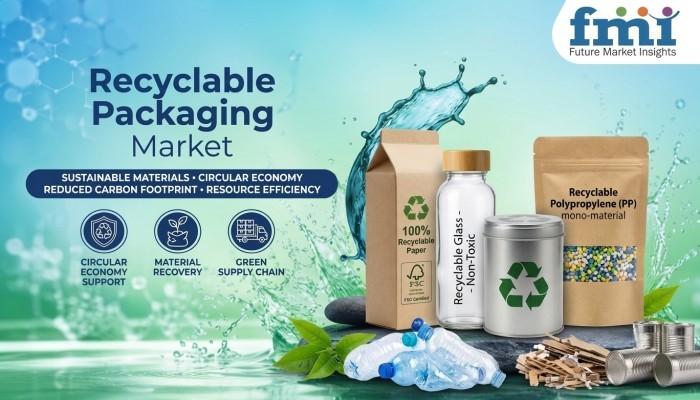
Future Market Insights projects the global recyclable packaging market will grow from USD 28.5 billion in 2025 to USD 66.5 billion by 2036. Manufacturers are increasingly redesigning packaging to meet stricter recyclability requirements and manage rising producer-responsibility costs, moving beyond voluntary sustainability commitments.
The global straw market was valued at USD 3.76 billion in 2026 and is projected to reach USD 4.61 billion by 2033, according to Markntel Advisor. Growth is attributed to rising foodservice activity and a consumer preference for biodegradable materials as single-use plastic regulations continue to influence the industry.
Mail slow? View this month’s issue, right online! Our digital version is easy to share with colleagues. See this month’s issue and digital versions of previous issues too. Subscribe to Beauty Packaging Magazine for the latest trends, innovations, and insights in packaging. Get your products and services in front of
Business News›Tech›Newsletters›Morning Dispatch›D2C brands rethink pricing, Microdrama's sustainability test Morning Dispatch D2C brands rethink pricing, Microdrama's sustainability test Want this newsletter delivered to your inbox? I agree to receive newsletters and marketing communications via e-mail Thank you for subscribing to Morning Dispatch We'll soon meet in your inbox. Happy Monday!
Direct-to-consumer brands in sectors including FMCG and packaging are rethinking pricing and strategy to protect margins. Founders report that rising costs for crude oil-linked raw materials, particularly plastic, have forced companies to weigh price hikes over the past year.
Hindustan Coca-Cola Holdings has warned that competition from Reliance-owned Campa could force the company to cut prices or increase marketing spend. The concerns were disclosed in a draft prospectus filed with SEBI ahead of a proposed initial public offering of shares.
EPL is exploring acquisitions of around 1,000 crore rupees as it seeks to build a 20,000 crore rupee global packaging business. The company plans to quadruple its revenue within five years, partly through a proposed merger with Singapore-based Indovida Packaging to combine tube and bottle manufacturing operations.
TCPL Packaging has announced a joint venture with Italy-based Brandart to expand its presence in the Asia-Pacific packaging sector. The partnership will operate through a new Singapore-based company, focusing on packaging, retail installations, and visual merchandising services.
Specialty chemicals startup altM has raised $10.3 million in Series A funding to expand manufacturing capacity and accelerate the commercialisation of bio-based industrial chemicals. The company plans to use the capital to strengthen research and development and support customer qualification programmes.
Field Packaging Solutions has acquired Buckeye Packaging, a flexible packaging manufacturer based in Ohio. Buckeye, which traces its origins to a high school teacher building bag-making machines in a barn in 1948, maintains a team of 60 employees. Terms of the transaction were not disclosed.
MM Group has agreed to sell a 70% stake in its packaging business to KPS Capital Partners in a transaction valued at approximately $2.64 billion. The deal allows MM Group to retain a 30% interest while focusing on its core board and paper operations.
MM Group has signed an agreement to sell its food, premium, pharma, and healthcare packaging operations to KPS Capital Partners. The deal values the business at 2.4 billion euros, with KPS acquiring a 70% stake in the newly established holding company.
Argosy-backed Command Medical has acquired IMATS, adding a third manufacturing site in Costa Rica. The deal is intended to extend the company's capabilities across the medical device manufacturing value chain.
New Delhi-based startup Bharat Semi has raised 215 crore rupees in seed funding to develop AI-enabled image sensors. The company, which is currently pre-revenue, aims to begin commercial production in 2027 to help devices process visual information without relying on additional hardware.
Izedon Carbonates has acquired the masterbatch manufacturing assets of Sonnex Packaging Nigeria. The deal provides Izedon with the technical know-how and equipment for the Sara Colours range, allowing the company to expand its output of filler masterbatch for plastics manufacturers.
Packaging, plastics and converting roles in India first, then global, checked today. Every listing links to the original posting. Bring your own bubble wrap.
Announce Type: new Abstract: We derive, implement and validate analytic nuclear gradients for three variants of $GW$ self-energies---the contour-deformation (CD), the analytic continuation (AC), and the contour deformation with $W$-analytic-continuation (CD-WAC)---and for the Bethe--Salpeter equation (BSE) built on top of. Preprint, not peer reviewed.
Announce Type: cross Abstract: Inertialess elastic instabilities can profoundly affect transport in complex-fluid flows, from mixing in microfluidic devices and displacement through porous media to polymer processing. While such instabilities are well understood in flows with curved streamlines, their origin. Preprint, not peer reviewed.
Announce Type: new Abstract: Even after decades of research, the nature of the glass transition is controversially debated: Kinetic freezing phenomena, purely local strain-mediated effects, or collective phenomena including a hidden phase transition are usually discussed. In this work, we. Preprint, not peer reviewed.
Announce Type: new Abstract: Accurately accounting for nuclear quantum effects (NQEs), including zero-point energy and nuclear tunneling, is essential for a reliable prediction of the structural, thermodynamic, and dynamical properties of chemical systems, particularly those involving light atoms. However, incorporating. Preprint, not peer reviewed.
Announce Type: new Abstract: Recently, Thomas et al. [Nanoscale 17, 18291 (2025)] showed that bismuth oxido nanoclusters (BiO-NCs) of the type [Bi$_{38}$ O$_{45}$ (Boc-L-Phe-O)$_{24}$] form chains when deposited onto gold or pyrolitic graphite substrates. This chain formation is significantly enhanced. Preprint, not peer reviewed.
Announce Type: cross Abstract: Hydrogels are biocompatible smart materials comprised of a hydrophilic polymer network which can absorb a large volume of water (swelling). The changes in shape the gel undergoes as it swells or de-swells can be utilised in. Preprint, not peer reviewed.
Scientists have turned the thin plastic used in emergency blankets into remarkably strong insulation that could help astronauts survive the Moon's extreme temperatures. Built from hundreds of stacked layers, the material withstands crushing pressure without losing its thermal protection, potentially paving the way for tougher, longer-lasting lunar habitats.